Which playground is shady at 2pm?
Or sunny at 10am in January?
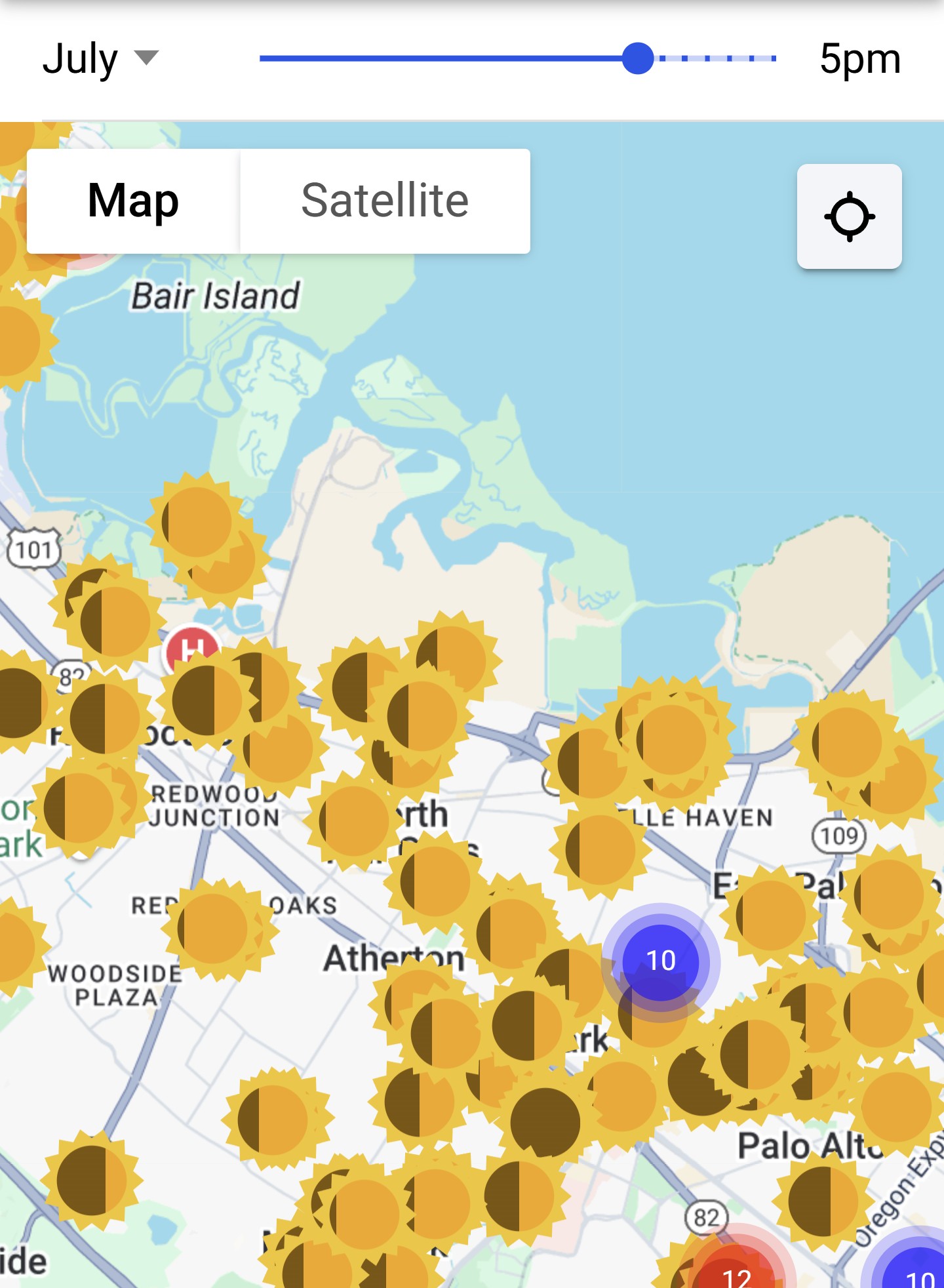
Ten playgrounds within 15 minutes—but shade and sun shift by hour. Pick when you plan to visit and see which parks are shady, sunny, or in between—not just which ones exist on the map.
Or sunny at 10am in January?
Ten playgrounds within 15 minutes—but shade and sun shift by hour. Pick when you plan to visit and see which parks are shady, sunny, or in between—not just which ones exist on the map.
Same map, opposite goals: find shade when it's hot, find sun when it's cold. PlayShade models both for the hour you pick.
Explore playgrounds across North America and open any park for details.
Choose when you plan to visit—today, tomorrow, or months ahead.
Filter for shade or sun and preview lighting before you pack the kids and leave.
On hot afternoons, shade means less UV, cooler equipment, and longer play without overheating. In winter, the same map helps you find sun instead. Why sun & shade at the playground matter
A dozen parks nearby, but only one has afternoon shade—and you don't know which.
You want outdoor play, but most parks are in building shadow. Find the one catching sun at 10am.
Every playground looks the same on the map until you arrive in the wrong light.
You picked the wrong park last time—too sunny in July, too shady in February.
Shade and sun levels are estimates from 3D map data and simulation. Actual conditions may vary with weather, seasons, or site changes.
PlayShade models the sun's path for your visit time and estimates shadows from trees, buildings, and play structures—updated for season and time of day using Google's 3D geospatial data.
Powered in part by @jdultra/threedtiles and JDULTRA.
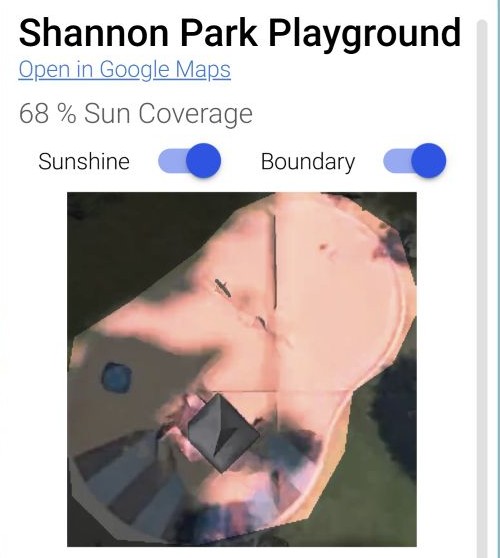
PlayShade maps public playgrounds across the United States and Canada. Set the hour you plan to visit and filter for shade or sun—not just pins on a map.
City-specific shade guides are coming soon. For now, open the map to explore any region we cover.
Shade lowers UV exposure and keeps play areas cooler on hot days. In winter, the same tool helps you find sun. Full background & references.
Open the map, allow location or pan to your area, pick a date and time, and filter for the playground that's actually shady at that hour—most won't be.
Yes. Coverage is focused on North America. Density varies by region depending on available playground and simulation data.
Most parks within a short drive are open and sunny. Real shade is rare—and it shifts hour by hour. PlayShade shows which playground is the exception at the time you plan to go.
The sun's angle changes through the day and across seasons. A playground shady at 10am can be in full sun by afternoon—PlayShade models shade for your chosen visit time, not a static label.
Yes. Pick a winter date and morning time, then filter for sunnier parks. Low sun and long building shadows mean many playgrounds are colder than they look—PlayShade shows which catch sun when you plan to go.
You can use the playground shade map in your browser. Native apps are available on the App Store and Google Play.
Open the map, choose your visit time, and find the playground that fits the weather.
Open PlayShade map